Post Office Services
The Post Office used the railways from the very start with mail bags being carried on the Liverpool & Manchester in 1830. With the opening of the London & Birmingham Railway in 1838, Post Office vehicles were developed to allow sorting of the mail en-route. Later in the same year, Travelling Post Office vehicles with sorting facilities and nets to pick up mail bags on the move and drop them off at the same time were introduced.
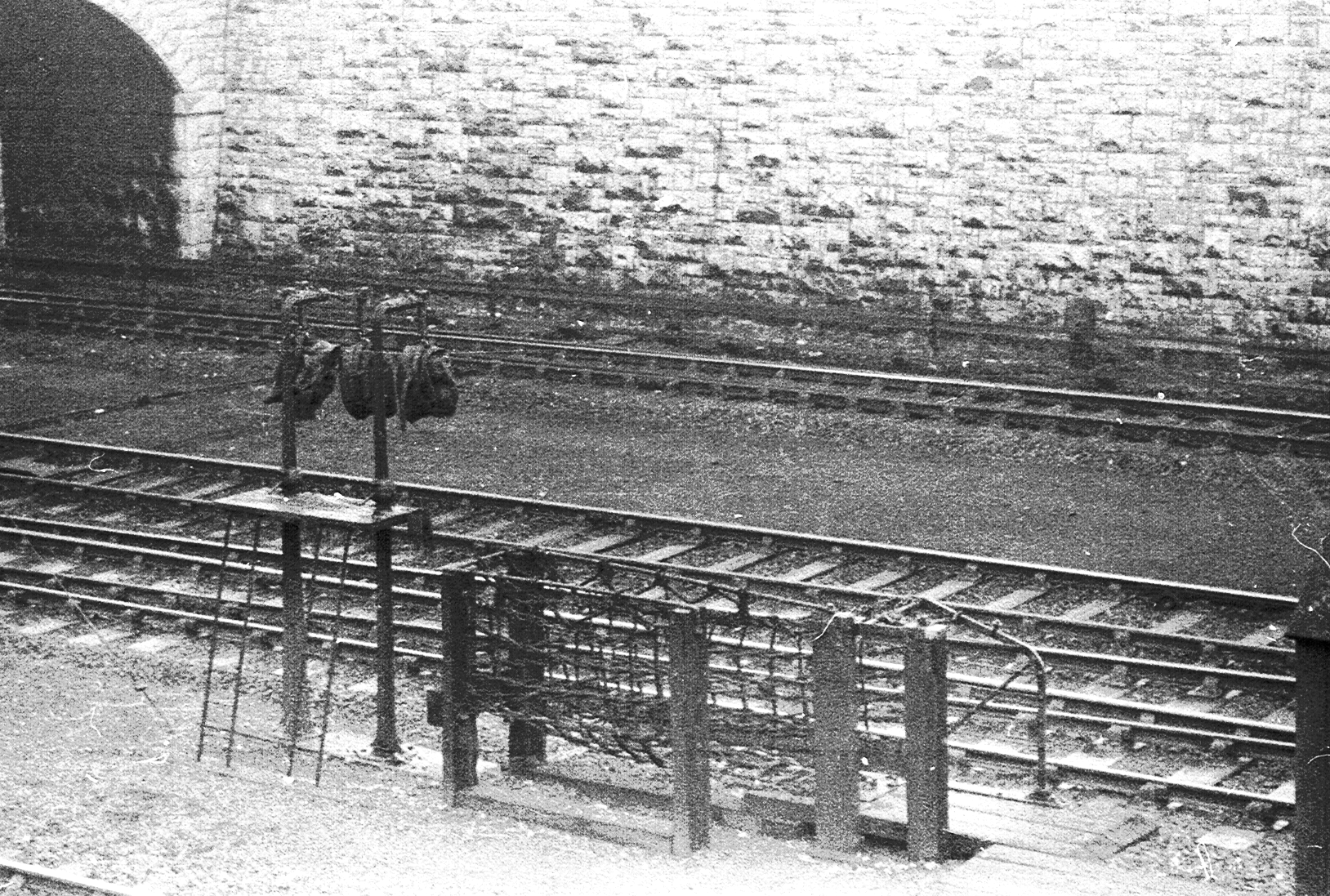
Letters were sorted in the mail carriages as the train travelled along. Batches of letters to be dropped off en-route were packed into strong leather pouches. On approach to one of the exchange points the net on the carriage side was extended outwards and pouches to be dropped off were attached to traductor arms, which were rotated out and down suspending the pouches just above track level. One or two pouches to be picked up were suspended from an arm that was swung out into the path of the carriage net. The impact of these pouches hitting the carriage net made the net snap back into the side of the carriage preventing the pouches bouncing out and throwing them into the carriage. A net beside the track simultaneously snatched the bags suspended from the carriage.
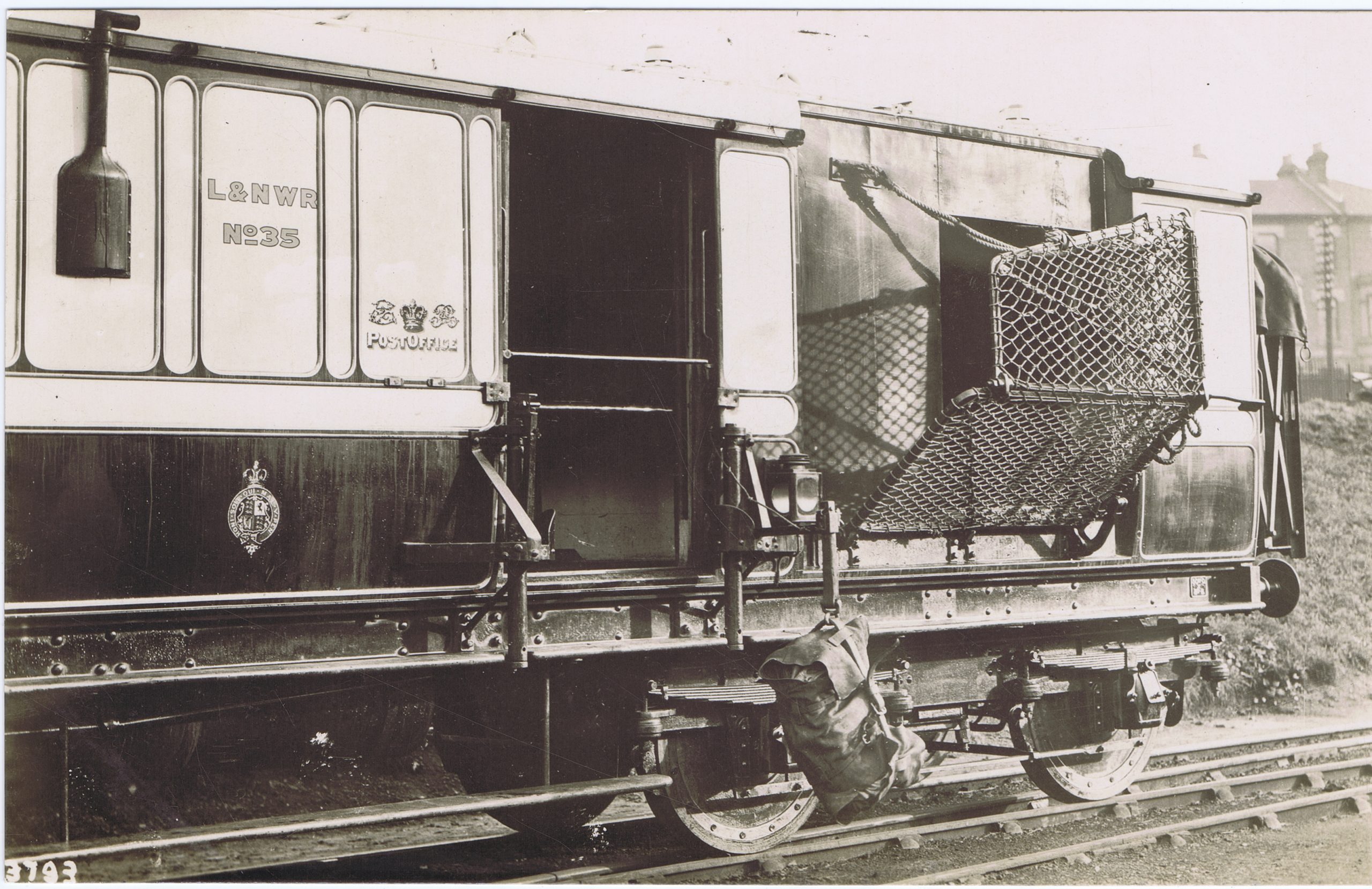
50ft TPO No.35 showing the pick-up net extended and a bag suspended on a traductor arm for drop off.
Lineside mail exchange apparatus with bags awaiting pick-up at Llandudno Junction for Up (London bound) mail trains.
On the train the newly received bags were unpacked ready to be sorted for destinations further down the line.
The process of exchanging mail bags in this way is well illustrated in the documentary film “Night Mail”. The carriages on the trains shown were mostly ex LNWR vehicles still in use by the LMSR.
There is a preserved example of one of the TPO carriages, on display at National Railway Museum in York. It is a 42ft vehicle from the Victorian era but the exchange apparatus remained the same into the 1950s.
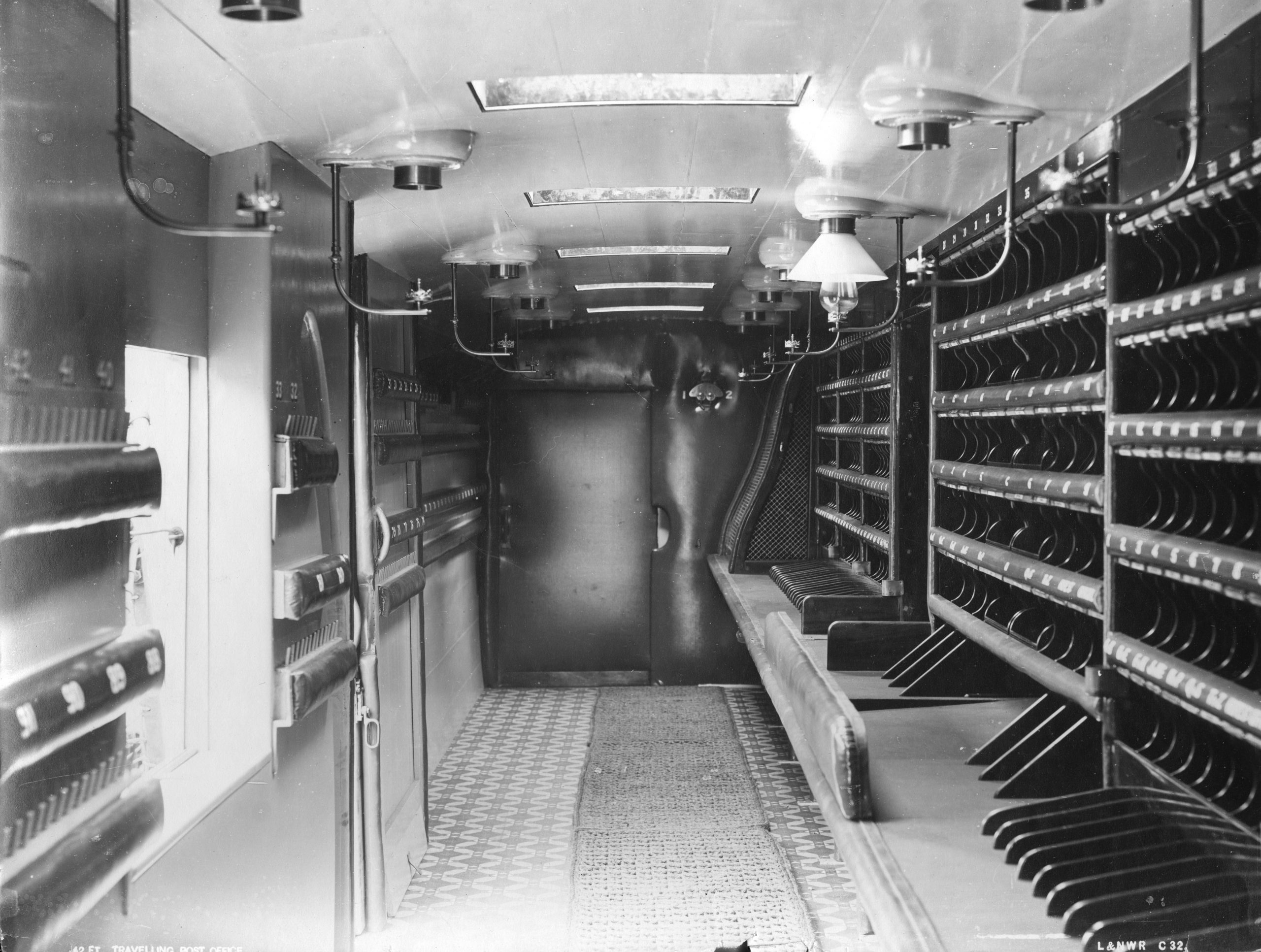
Interior of 42ft TPO No. 187 preserved at the NRM. On the right are the letter sorting racks and on the left are hooks for mail bags used to collect the sorted mail for each destination.
Besides the carriages with mail exchange apparatus, other vehicles were marshalled into the Post Office trains for sorting letters and parcels, after 1884 when the Post Office began its parcel service. These vans also held mail bags until needed for transfer. The trains stopped at major junction stations where mail bags could be unloaded for destinations on connecting lines and bags from these lines loaded onto the train for sorting and delivery to places further on. Places like Crewe were extremely busy particularly at night handling all of the mail traffic.
The LNWR was also involved in the carriage of transatlantic mail via its Irish mail services. The mail travelled via Holyhead, where it was taken by steamer to Dublin and then by train to Queenstown (now Cobh) in southern Ireland. It was then transferred by tender to transatlantic liners off the coast. This process, which saved about a day in the journey, also operated in reverse for mail from north America.
Mail trains developed to have corridors which, unlike the corridor carriages used by passengers had the connections on one side of the carriage end rather than the centre.
The Post Office demanded that the mail trains ran to tight timings so that passenger accommodation on these trains was very limited. The contracts also demanded that the railway provided a number of platform barrows at the main stations for use by Post Office staff moving the mail bags.
