Royal Mail
The Post Office monopoly of Royal Mail dates from an act of Parliament in 1657, with the first Postmaster General being appointed in 1661. The General Post Office was created in 1660 by the Post Office Act of that year. By 1784 the first mail coaches were running between London and Bristol.
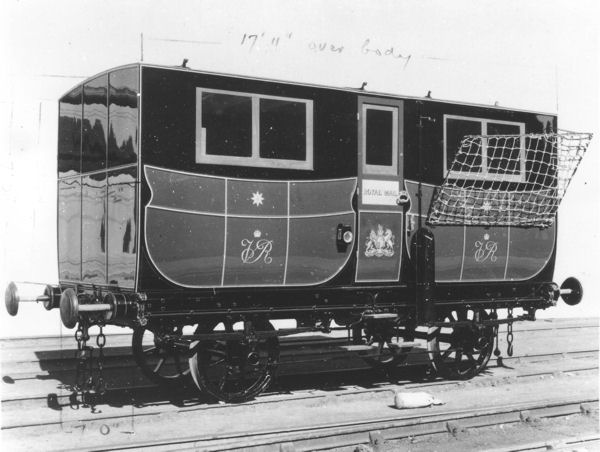
The history of the Royal Mail being carried by the rail goes back almost to the first railway. Indeed, the act of parliament giving the Postmaster General the power to dictate to the railway companies on when and where mail trains should run – the Railways (Conveyance of Mails) Act, dates from 1838.
Mail was carried by the Liverpool and Manchester Railway from 1830. The first recorded mail carriage ran on the Grand Junction Railway in January 1838 and on the London & Birmingham Railway from September 1838. All three of these companies were constituent companies that formed part of the L&NWR when it was formed in 1846. Therefore, the Premier line can lay claim to being the first to run mail carriages.
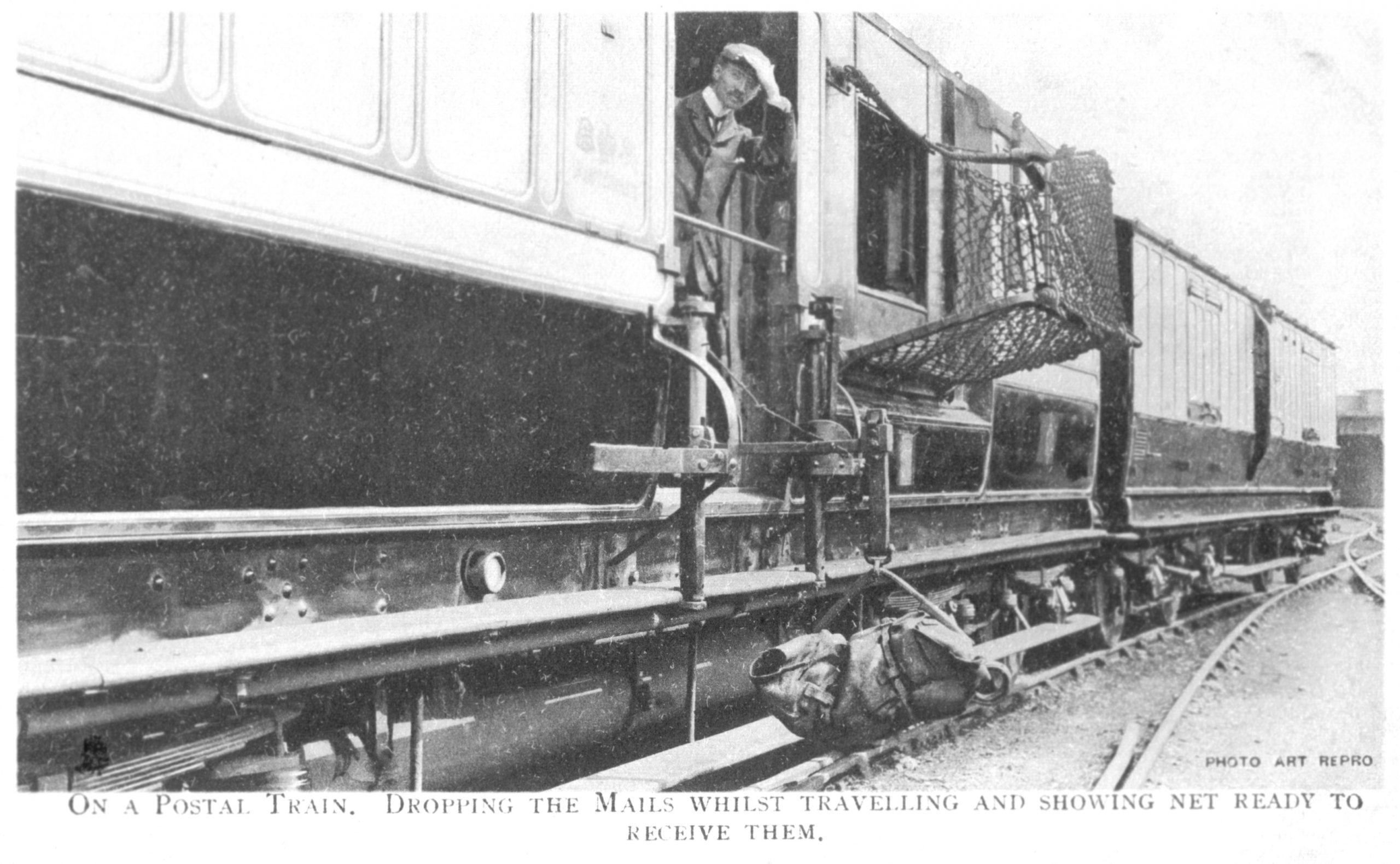
The Irish Mail was introduced in 1848 and ran between Euston and Holyhead, although an uninterrupted through route had to wait until the Brittania Bridge was opened.
The Post Office introduced the flat rate system for letter post on the 10th of January 1840. The famous “Penny Black” was introduced in May of that same year, the first postage stamp anywhere in the world. The Post Office had a monopoly of letter post but did not get into the parcels business until 1884.
By the end of the 19th century many towns and cities had multiple deliveries every day (Sundays excepted) It was possible to post a letter at lunchtime and have it delivered locally by late afternoon. Postcards became popular, especially in the early years of the twentieth century, when as many a 17 million a year were posted. The LNWR, in common with other railways, introduced large ranges of postcards to take advantage of this huge market
